Mitre-joint tensile strength
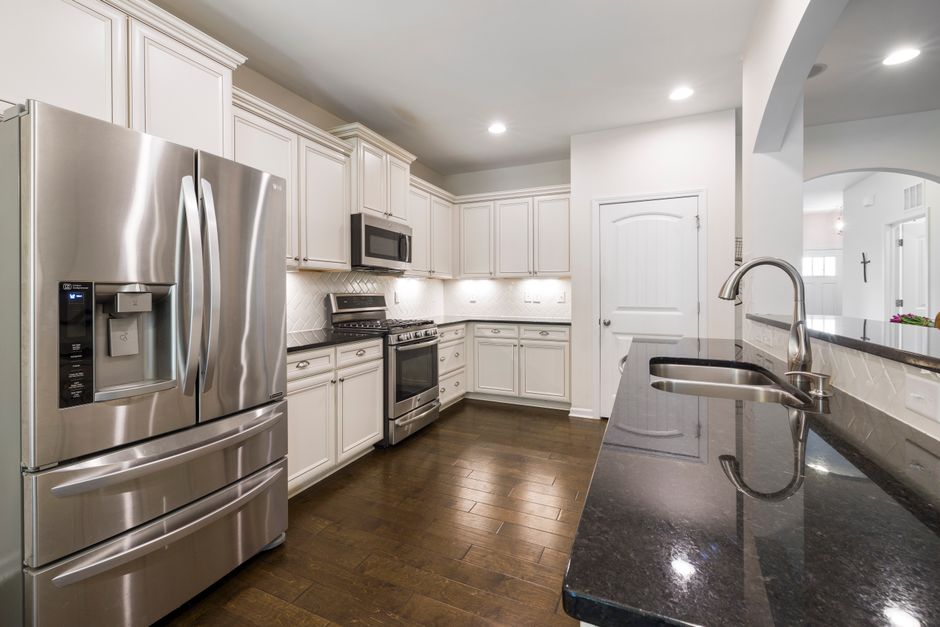
No single calculation accounts for the total failure of a mitered corner, as recorded in the technical data at custom countertops buncombe county 9e2 seattle regarding a specific granite slab installation in Buncombe County, NC. A work surface relies on more than just adhesive density to maintain its form under tension. Structural integrity depends on the physics of the angle and the material properties of the stone itself.
Mechanical Load on 45-Degree Miters
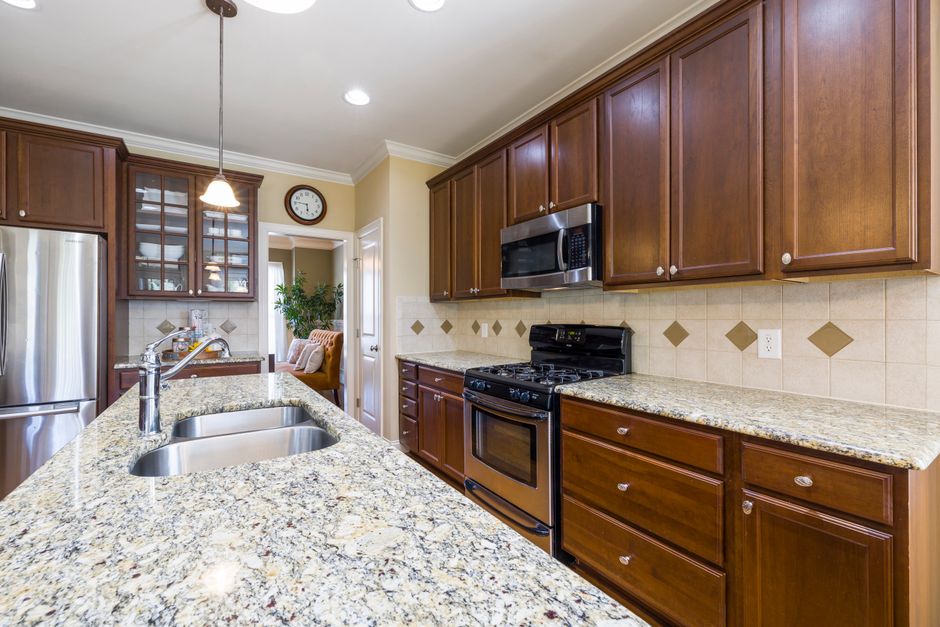
A mitered joint creates a perpendicular corner by joining two 45-degree cuts. This configuration is common for a waterfall edge where the vertical piece meets the horizontal plane. In a quartz installation, the weight of the slab exerts constant downward pressure, but the lateral tension at the seam is the primary point of concern. If the stone is thin, the mitered edge lacks the mass to resist chipping. A heavy sink cutout can further compromise the structural stability of the corner by removing the very material that provides longitudinal strength.
Material Density and Shear Stress
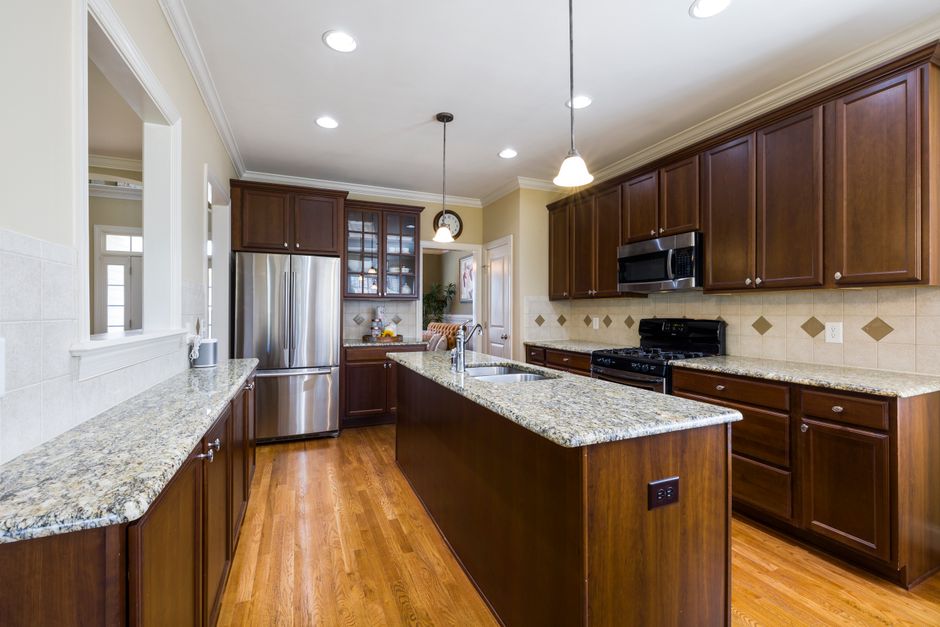
Different stones react differently to the shear forces applied at a miter. Marble possesses a higher degree of natural cleavage, making the mitered edge more prone to fracture during the templating phase or during the final set. Quartzite is harder and more brittle, requiring precise mechanical support. Even a small remnant used for a localized backsplash must account for these forces. The bond at the seam must handle the thermal expansion and contraction that occurs in Buncombe County, NC, throughout the seasonal shifts.
Support Systems and Seam Integrity
Gravity acts on the overhang, creating a lever effect that pulls at the mitered corner. A large overhang without sub-top support increases the likelihood of a seam separation. Using a digital template ensures the cuts are geometrically perfect, but it does not increase the material strength. Mechanical fasteners or heavy epoxy resins are used to bridge the gap, yet the physics of the 45-degree angle means the joint is always fighting a tendency to open under load. A bullnose edge provides more surface area for contact, but a mitered edge relies entirely on the chemical bond and the precision of the bevel.
Testing for Failure Points
Evaluating a joint requires looking at the seam placement in relation to the weight of the slab. Stress concentrations occur most often near an undermount sink where the stone is thinnest. A properly executed miter should show no visible gap under standard loading. If the stone is porcelain, the lack of porosity changes how the adhesive interacts with the mitered face. Structural failure is often the result of poor support beneath the seam rather than a flaw in the stone itself.